
Lodgr: The Founder’s Story
The journey from a medicine hopeful to building the trust layer for student housing.

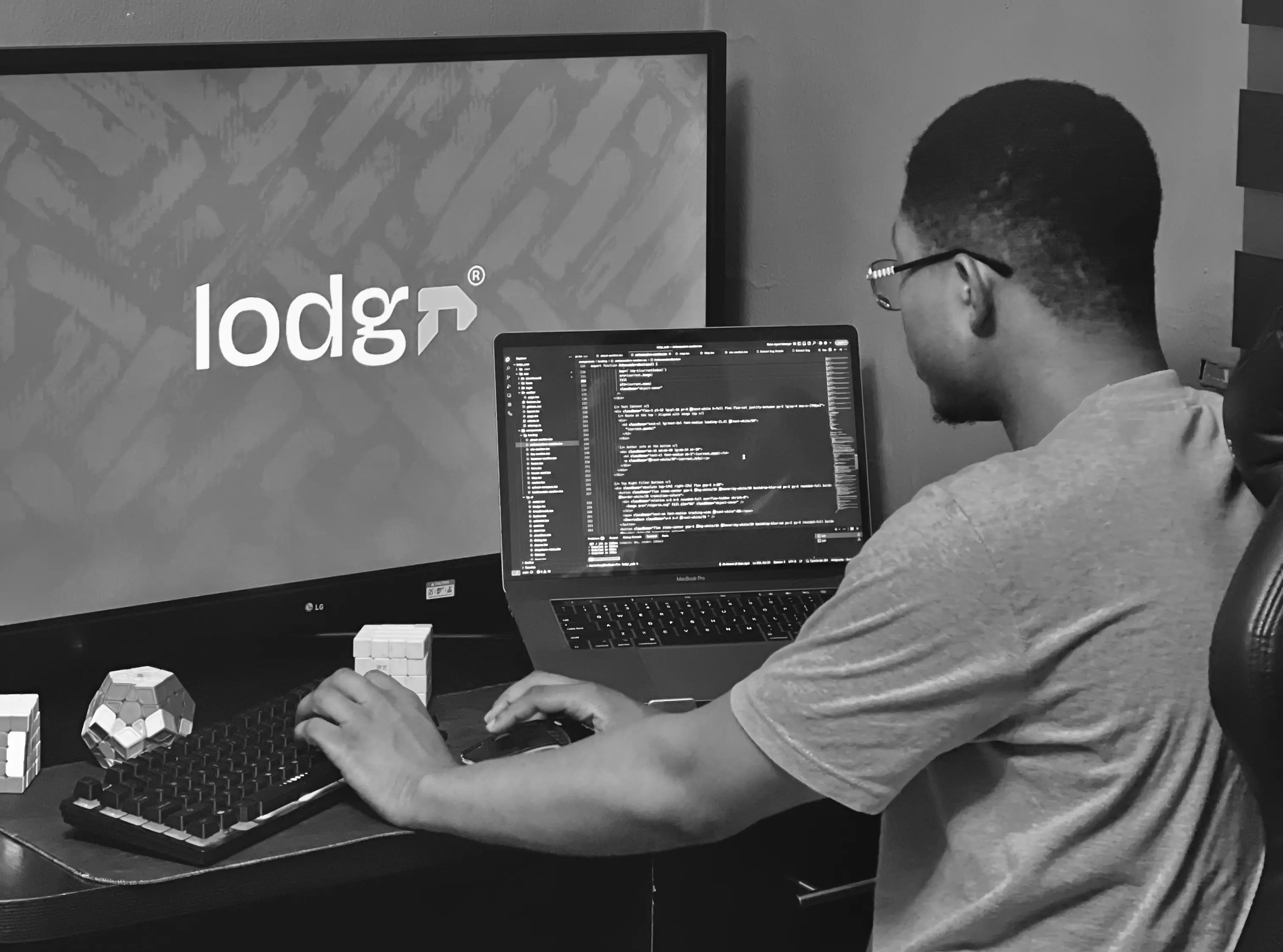
My nickname is DoctorBee.
Has been for as long as I can remember. Not because I was already a doctor — obviously — but because I wanted to be one so badly that the name arrived before the degree did. That’s how strong the pull was. I didn’t choose medicine. Medicine chose me first and I just spent the next several years trying to catch up to it.
I graduated from Baptist Boys High School, Oke Saje, Abeokuta in 2020. The plan was clean and simple: study hard, get into the University of Ibadan, study Medicine and Surgery, become a doctor, DoctorBee stops being a nickname and starts being a title.
Simple plans have a way of becoming complicated the moment they meet real life.
The Years Between
Here is what nobody tells you about the gap between secondary school graduation and university admission: it’s actually a whole life. A compressed, disorienting, occasionally wonderful life that you only recognize as formative in hindsight.
I explored different versions of myself in those years. At some point I was serious about poetry and spoken word art — standing in front of people and saying things I’d been carrying around in my chest. Then 2021 arrived and I leaned into fashion design, making a living with my hands, which is something I’m still quietly proud of. But through all of it, I couldn’t get the JAMB score I needed. Medicine in UI demands a certain kind of competitive focus and for two years, I was too busy discovering who I was to narrow down hard enough.
So I left Abeokuta. Packed up, moved to Agbowo, Ibadan, and enrolled in Distinguished Scholars Academy — a prestigious academy with a track record of actually getting people where they needed to go. Serious place. Serious people. The kind of environment that has no patience for distraction.
It worked.
I got into UI in 2022.
Not Medicine and Surgery though. My JAMB score wasn’t above 300, so I opted into Veterinary Medicine — because at least I was in. At least I was an undergraduate. At least the plan was still alive, even if it had taken a detour through animal anatomy.
I want to be honest: I did not like Veterinary Medicine. Not one bit. But I was in UI. And that counted for something.
The Robbery. The Room. The Beginning of Everything.
DSA had provided accommodation for students during our study period. After JAMB, after the admission came through, something happened that I was — quietly — lucky to have missed.
We got robbed.
I wasn’t at home when it happened. I almost never was. My routine then was to leave the hostel and go to Indy Hall — read until daybreak, code through the night, sometimes both at the same time, powered by the reliable electricity that Indy Hall always had and the remote work I was doing for a startup in Minnesota, USA. The hostel was technically where I slept. Indy Hall was where I actually lived.
So when the incident happened and everyone left the apartment, I was already halfway out. What I wasn’t prepared for was being a native of Abeokuta with no map of Ibadan, suddenly responsible for finding my own place to live in a city I barely knew.
I left my belongings at a friend’s place. Kept my schedule simple: go to his house, clean up, dress nice, return to Indy Hall, work and read, repeat. It was functional. It worked — until his rent ran out and he had to pack out too.
And so began my first real encounter with the beast that would eventually become Lodgr.
House Hunting in a City That Doesn’t Know You
The system works like this.
You find an agent. You pay an inspection fee — somewhere around ₦2,000 to ₦3,000 per house — to see apartments. If the house is far, you’re covering the agent’s transportation and your own. One house, manageable. Two houses, still fine. By the tenth house, you’ve spent a meaningful chunk of what was supposed to be your rent money, on stress.
That’s the traditional way and over the years, students have simply adapted to it. Because what choice do they have?
I had a good friend in this season. Chimex understood what I needed. My number one priority, after the robbery, was security. I wasn’t inspecting anything before confirming: vigilantes at night, lower record of invasion, environment that wouldn’t make me anxious every time I closed my eyes. Chimex helped me ask the right questions.
After about a month of searching, I found a spacious, affordable room on a street in Barika. Close to school. Secure environment. Good electricity — essential for a remote worker. Water. The only downside was sharing a bathroom and toilet with three other people.
I took it. Late 2022. A few weeks before my Matriculation. I was an undergraduate, I had a room, and I had survived my first round of this.
I didn’t know it would happen again. Twice.
Ibadan to Ilorin. The Agent Who Stole ₦40k and Somehow Kept His Peace.
After two failed JAMB attempts trying to get into Medicine at UI, I made a decision: try another university. University of Ilorin had an open post-UTME form. I applied. I got in.
Optometry.
We have an optometry clinic in my family. The course is promising. The path makes sense. And honestly, after years of this, being an undergraduate in a health science course that I could actually work with felt like something to hold onto.
(I wrote JAMB again in 2025, by the way. 2020 to 2025. A full JAMB spree. But that’s a story for another day.)
100 level in Ilorin, I moved in with my childhood friend Abdul Gafar, who happened to be a Unilorite too. I told him I’d stay for two months.
That two months became my entire 100 level academic session. 😹
200 level, I needed my own space. And so the house hunting started again — new city, no map, same broken system.
I found an apartment I absolutely loved. Final year student packing out. Spacious, water heater, private kitchen and toilet, clean, well-set-up. Rent was ₦350k but the room was free for the next three months, so the agent offered me a deal: pay ₦230k now for three months, then ₦350k in January.
They pressured me to decide on the spot.
I loved the apartment. I paid the ₦230k. They didn’t give me the key.
The following day, I did the math. I still needed to move my things from Ibadan to Ilorin. Still needed to set up the room. And then in three months, I’d have to pay ₦350k anyway. The ₦230k made no sense.
I asked for a refund within 24 hours — not even a full day later — and they sent me back ₦190k.
₦40k gone. No explanation. The agent’s commission, presumably, for doing nothing. The house owner had clearly refunded in full. The math doesn’t lie.
I wasn’t the type to cause trouble. So I let it pass. But I filed it. Carefully.
One month of searching later — daily, back and forth, the full process — I found the right place. Gated fence. Wardrobe. Kitchen slab. Solar generator for each room. Good environment.
Once bitten, twice careful. I moved in.
The Conversation That Made It Real
Here’s the thing I haven’t told you yet.
While I was doing all of this house hunting in Ilorin, I was pitching Lodgr every single day to the agent helping me. Not formally. Not with a deck. Just talking. Explaining the problem I was living through in real time, and the solution I’d been carrying in my head for years.
He loved it. He said he’d be genuinely interested. And then, because he was an agent who had seen this system from the inside, he started explaining the other side of the story — the part students almost never stop to consider.
A student is looking for an apartment. They call an agent. The agent has to drop everything, leave whatever he was doing, and spend hours under the sun walking from house to house with this student — who may or may not even like anything they see.
The student pays an inspection fee. Then resents paying it, because they didn’t find anything they liked.
But do you expect a grown man to follow you up and down in scorching sun for free? 😹
That’s the irony of the whole thing. And it gets better — or worse, depending on how you look at it. Agents decide their own commissions. No standard. No regulation. An agent can wake up and decide a ₦200k apartment is worth ₦300k today, based purely on how they read the student in front of them. Experienced, naive, urgent, indifferent — they calibrate accordingly.
And those same students go to hotels and see fixed prices with zero complaints. But the moment they find out three months later, from a co-tenant, what the actual rent was — suddenly they’re online calling everyone a scammer.
The broken system creates the exploitation. If there were a standard, both parties would know exactly where they stand. No one would feel cheated, because no one would be guessing.
That conversation crystallized something I’d been circling for years. The problem wasn’t just personal anymore. It was structural. And structural problems don’t fix themselves.
Why Ilorin. Why Now.
What finally pushed me over the edge wasn’t my own experience. It was a friend’s.
While he was in 100 level, he gained admission to the University of Abuja. He found a house. He paid ₦450k for rent. He traveled. He arrived. And they told him the apartment already belonged to someone else.
Imagine. ₦450,000. Gone. In a city he was new to, trying to start a new chapter of his life.
Around that same time, my friend Liz from the US was visiting Nigeria and staying at Abuja Continental Hotel. She invited me over. I went — navigated the whole of Abuja with Google Maps and asked a stranger for directions exactly once. Came back home feeling something I couldn’t quite name at first.
I sat with it for a while.
Then it clicked.
For over four years, students had been ranting, posting, warning each other online — and then adapting anyway because there was nothing else to do. The noise was loud. The problem stayed. And anyone who wanted to fix it kept stopping because they believed you’d need agents to cooperate, and agents would never cooperate.
That last part is wrong. And I knew it.
I opened my jotter. I wrote Lodgr at the top of the page.
And Then the Universe Sent Hult Prize
The idea had been inside me for years. The timing, finally, felt right. And at the exact moment Lodgr needed to meet the world, Hult Prize showed up — through an argument with YK on a Saturday evening, through a last-minute submission, through a Valentine’s Day pitch that made us first runner-up and earned us an exception to compete at Nationals.
We didn’t win Nationals.
But we left with something that winning couldn’t have given us: the proof that this company deserved to exist. A signed MOU with NAUS. 2,000-plus students on a waitlist. 50 campus ambassadors. A landlord who handed us full management of a 50-room hostel before we even launched. Conversations with investors. A pitch we could walk into any room and deliver without apology.
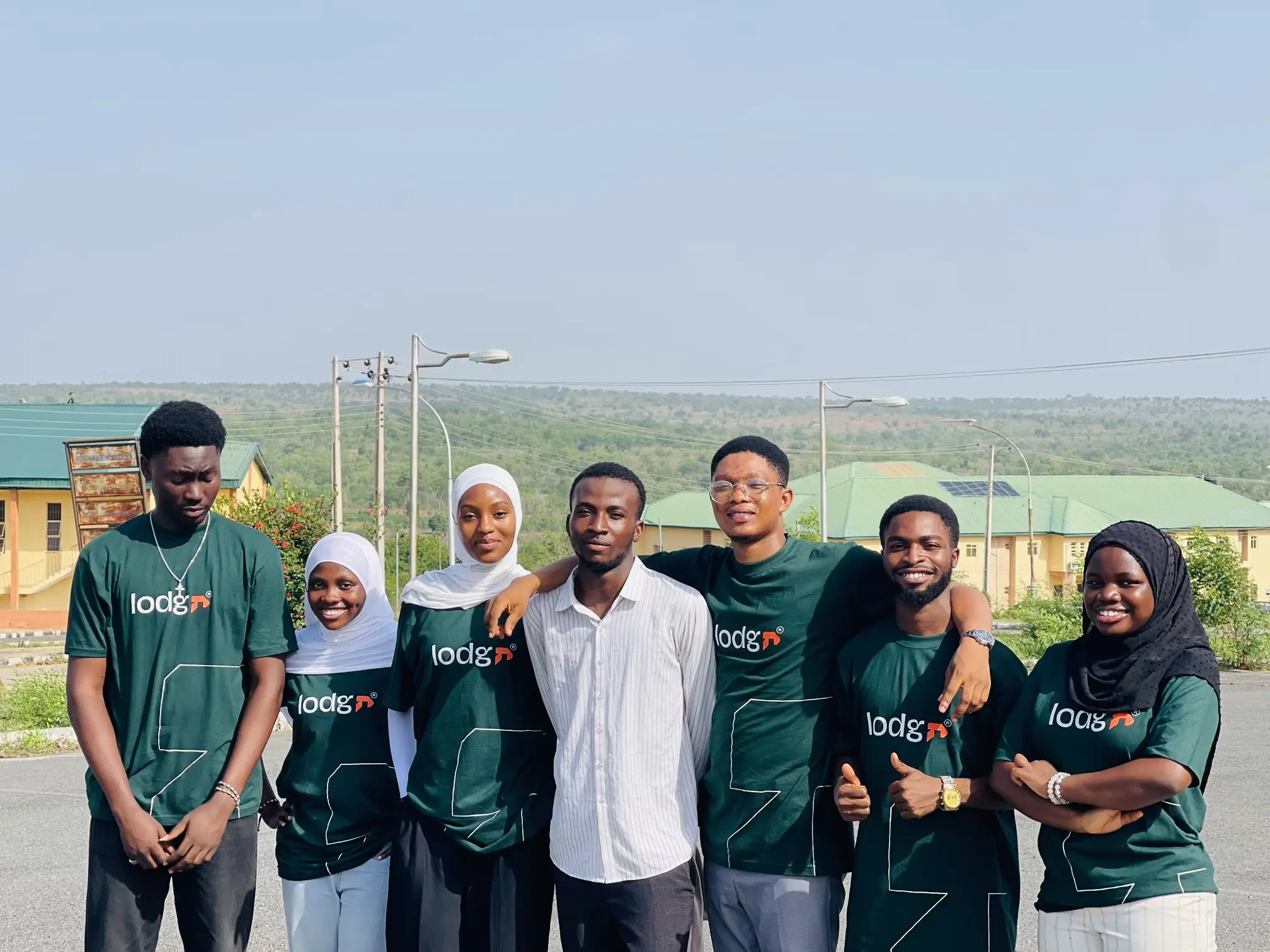
DoctorBee is becoming a doctor after all. A Doctor of Optometry — and if you know anything about what Optometrists actually do, you know that title is earned, not gifted. The nickname was never wrong. It was just waiting for the right degree to catch up to it. And somewhere between Abeokuta and Ibadan and Ilorin, between bad agents and a stolen ₦40k and a friend who lost ₦450k in Abuja, between a jotter and a Saturday argument and a Valentine’s Day pitch —
A founder was being built too.
Lodgr is here. And it’s not going anywhere.
Follow the Lodgr journey on X and LinkedIn. If you’re a student looking for verified campus accommodation, join the waitlist at lodgr.homes.


Discussion
Be the first to comment.